When the temperatures drop in Bountiful, Park City, or Sandy, there is nothing quite like the instant warmth of a gas fireplace. Many homeowners know that gas fireplaces are a cleaner, more convenient alternative to wood-burning hearths. While they don’t produce smoke, sparks, or soot, they are still powerful heating appliances that require mindful operation.
At Croft Fireplace, we pride ourselves on being the most reliable provider of modern hearth solutions. To ensure your family stays both warm and protected, we’ve updated our guide to include everything you need to know about modern hearth safety. Whether you’re a long-time owner or considering gas fireplace installation services, understanding these precautions is the first step toward a cozy winter.
Are Gas Fireplaces Safe for Daily Use?
Modern gas fireplaces are incredibly safe for daily use when installed correctly and maintained regularly. Unlike wood fires, which suffer from creosote buildup or unpredictable sparks, gas units operate within a controlled system. However, the answer to “is a gas fireplace safe?” depends largely on your commitment to safety protocols and professional oversight.
Today’s models feature advanced safety tech, such as oxygen depletion sensors and 100% fail-safe shut-off valves. These systems detect issues before they become hazards. When you use your fireplace as a heat source in Layton or West Jordan, you can feel confident in its design, provided you respect the unit’s operational limits.
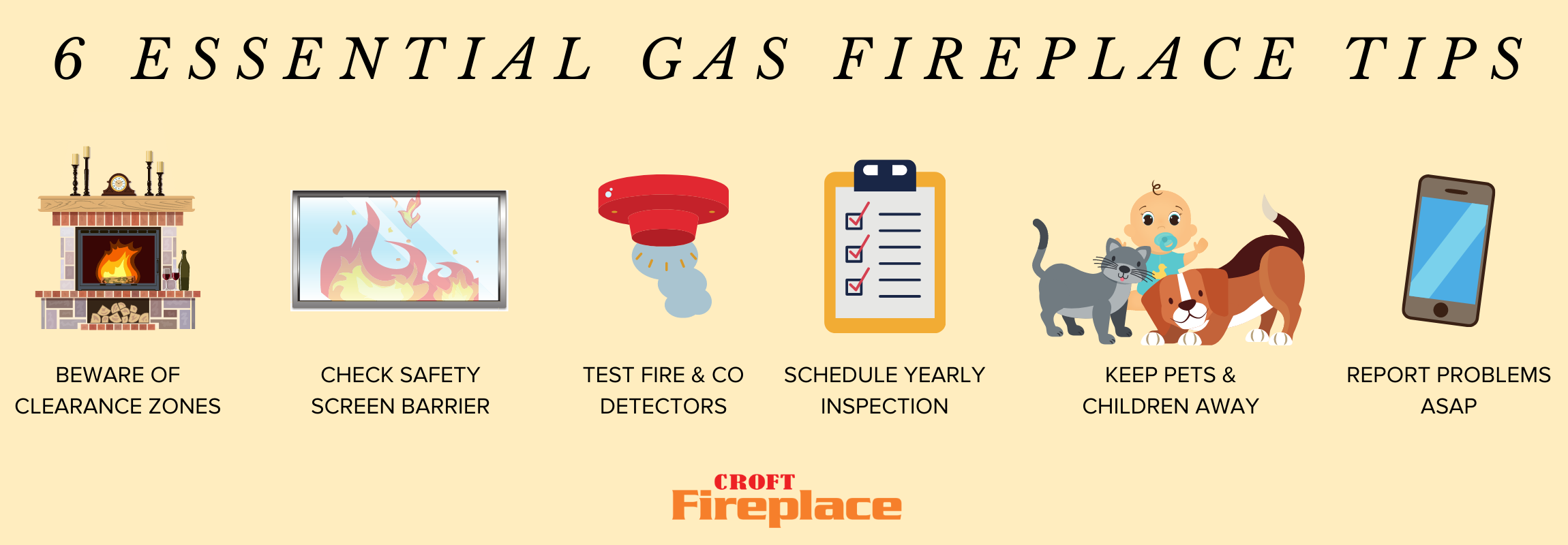
Gas Fireplace Safety Tip #1 – Maintain Proper Clearance Zones
A “clearance zone” is the designated area around your fireplace where it is unsafe to place flammable materials. It might be tempting to decorate your mantle with banners or place a favorite armchair next to the glass, but doing so creates a significant fire risk.
Keep items like wood, paper, furniture, and window treatments away from the firebox. Clearance requirements vary by model, so consult your owner’s manual. If you are looking to upgrade an old hearth to a safer model, we specialize in gas fireplace conversions to help modernize your home safely.
Gas Fireplace Safety Tip #2 – Inspect the Glass & Safety Screen Regularly
Most modern gas fireplaces feature a durable glass panel that seals the firebox, making the unit more efficient. However, this glass can reach temperatures exceeding 400°F and remains hot long after the flames are extinguished.
To mitigate contact burns, most direct-vent fireplaces manufactured after 2015 include a safety mesh screen. Routinely check this screen to ensure it is properly attached and undamaged. If your glass appears cracked or cloudy, do not operate the fireplace. A compromised panel can allow combustion gases, including carbon monoxide, to leak into your home.
Gas Fireplace Safety Tip #3 – Perform a Gas Fireplace Safety Check Every Year
Just as you wouldn’t drive a car for years without an oil change, you shouldn’t run your fireplace without a professional tune-up. A yearly gas fireplace safety check is the most effective way to extend the life of your appliance and catch minor issues before they become dangerous.
During an inspection, a technician will:
- Clean the burner and control compartment.
- Check the venting system for obstructions like debris.
- Inspect the glass gasket for a proper seal.
- Ensure the pilot light and ignition system function efficiently.
For homeowners in Utah, scheduling this maintenance in late summer ensures you are ready the moment the first frost hits. We provide comprehensive gas fireplace services in Davis County to keep your system running perfectly.
Gas Fireplace Safety Tip #4 – Use Smoke & Carbon Monoxide Detectors
Even a well-maintained fireplace can encounter unexpected issues. Every home should have working smoke and carbon monoxide (CO) detectors on every level. Carbon monoxide is a colorless, odorless gas that can be lethal if it builds up due to a malfunctioning fireplace or blocked vent.
Don’t wait for the low-battery “chirp.” Test your detectors monthly and replace the batteries annually. These devices are your final line of defense, providing a vital warning if something goes wrong behind the scenes.
Gas Fireplace Safety Tip #5 – Keep Children & Pets at a Safe Distance
Bright flames are naturally attractive to toddlers and pets. Because metal and glass components remain hot for over an hour after the fire is turned off, supervision is non-negotiable.
Establish a “no-play zone” of at least three feet in front of the hearth. For families with very young children, a permanent safety gate provides an extra layer of physical separation. Additionally, keep your fireplace remote out of reach to prevent children from accidentally turning the unit on.
Gas Fireplace Safety Tip #6 – Report Flame, Odor, or Ignition Issues Immediately
If your fireplace behaves strangely—such as struggling to light, producing an odor, or showing a sudden change in flame color—discontinue use immediately. A “rotten egg” smell is a classic sign of a gas leak, while a smoky smell could indicate a venting problem.
As the provider of thebest gas fireplaces in Salt Lake City, UT, Croft Fireplace is equipped to service all brands we sell. Never attempt to fix a gas line issue yourself. Turn off the gas supply and call the professionals.
Can I Leave My Gas Fireplace on All Night?
While many enjoy the glow of a fire as they fall asleep, it is not recommended to leave a gas fireplace on all night. Leaving them unattended for hours increases the risk of oxygen depletion or mechanical failure going unnoticed.
If you use your fireplace for heat, consider a model with a thermostat or timer. This allows the unit to cycle off once the room reaches a comfortable temperature, ensuring you stay warm without the risks of an unattended flame.
Should I Leave the Pilot Light On in Winter?
When considering seasonal maintenance, many homeowners ask: should i leave pilot light on gas fireplace in winter? Generally, yes, it is beneficial to leave it on during the colder months. Keeping the pilot lit:
- Prevents Moisture: The small amount of heat keeps the firebox dry, preventing corrosion.
- Offers Instant Warmth: You won’t struggle with lighting the unit during a cold snap in Park City.
- Deters Insects: Heat can prevent spiders from spinning webs in burner tubes, which is a common cause of ignition issues.
Are Gas Fireplaces Dangerous Compared to Wood Fireplaces?
Statistically, gas fireplaces are significantly safer than wood-burning ones. Wood fires carry risks of chimney fires, smoke “back-puffing,” and jumping embers.
However, “safer” does not mean “hazard-free.” The dangers of gas—primarily leaks and carbon monoxide—are often invisible, whereas wood fire dangers are visible. This makes routine professional maintenance critical for gas fireplace owners to ensure invisible systems are working as intended.
Final Gas Fireplace Safety Checklist for Homeowners
To keep your Utah home safe, follow this quick seasonal checklist:
- Clearance: Move all holiday decor and furniture 3 feet away.
- Glass: Inspect for cracks or white “foggy” buildup.
- Screens: Ensure the safety mesh is securely in place.
- Alarms: Test CO and smoke detectors; replace batteries if needed.
- Service: Confirm your annual professional inspection is scheduled.
- Operation: Check that the remote and wall switch are working correctly.
Conclusion + CTA
A gas fireplace is a wonderful addition to any Utah home, providing a beautiful focal point and reliable heat during our coldest months. By following these gas fireplace safety tips, you can enjoy the ambiance of your hearth with total peace of mind.
If you have any questions about your unit or need to schedule a professional safety check, give Croft Fireplace a call. We provide the most reliable and convenient gas fireplace services in Salt Lake County.
Contact us to book an appointment:
- Bountiful/Woods Cross: 385-855-1775
- Salt Lake City: 801-820-0919
Frequently Asked Questions
Are gas fireplaces safe to use every day?
Yes, they are designed for regular use. However, they should be inspected annually by a professional to ensure all safety components are working correctly.
Can I leave my gas fireplace on all night?
It is not recommended. It is safer to use a thermostat-controlled unit or turn the fireplace off before going to bed to prevent oxygen depletion or undetected issues.
Are gas fireplaces dangerous if not maintained?
They can be. Lack of maintenance can lead to blocked vents, gas leaks, or carbon monoxide buildup. Regular service is the best way to keep them safe.
Should I leave the pilot light on my gas fireplace in winter?
Generally, yes. It keeps the components warm and dry, preventing “cold starts” and keeping insects out of the burner.
What are the most important gas fireplace safety tips for homeowners?
The most critical tips include maintaining clearance zones, installing carbon monoxide detectors, and scheduling an annual professional inspection.