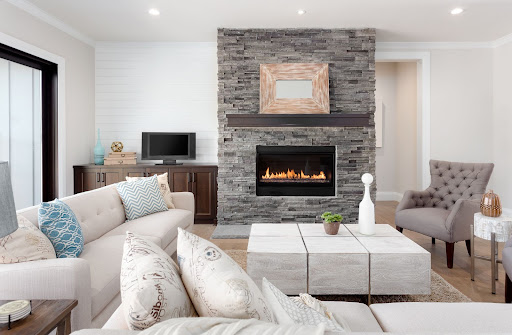
Understanding How Electric Fireplaces Heat Your Home

Understanding How Electric Fireplaces Heat Your Home

How do electric fireplaces work, and should you consider getting one? Firstly, electric fireplaces use electricity to generate heat alongside realistic flame effects, giving you all the warmth of a classic fireplace with a few unique perks. 

Croft Fireplace is a trusted local expert for Utah homeowners seeking to enhance their home with a new fireplace or replace an existing one. While traditional gas fireplaces will never lose their appeal, electric fireplaces have become increasingly popular over the years. 

These stylish alternatives to classic fireplaces could be a great addition to your home, so we’ll break down their benefits, types, costs, and more. By the end of this piece, you’ll know for sure if an electric fireplace is the right pick for your condo, apartment, or house.

How Do Electric Fireplaces Work?

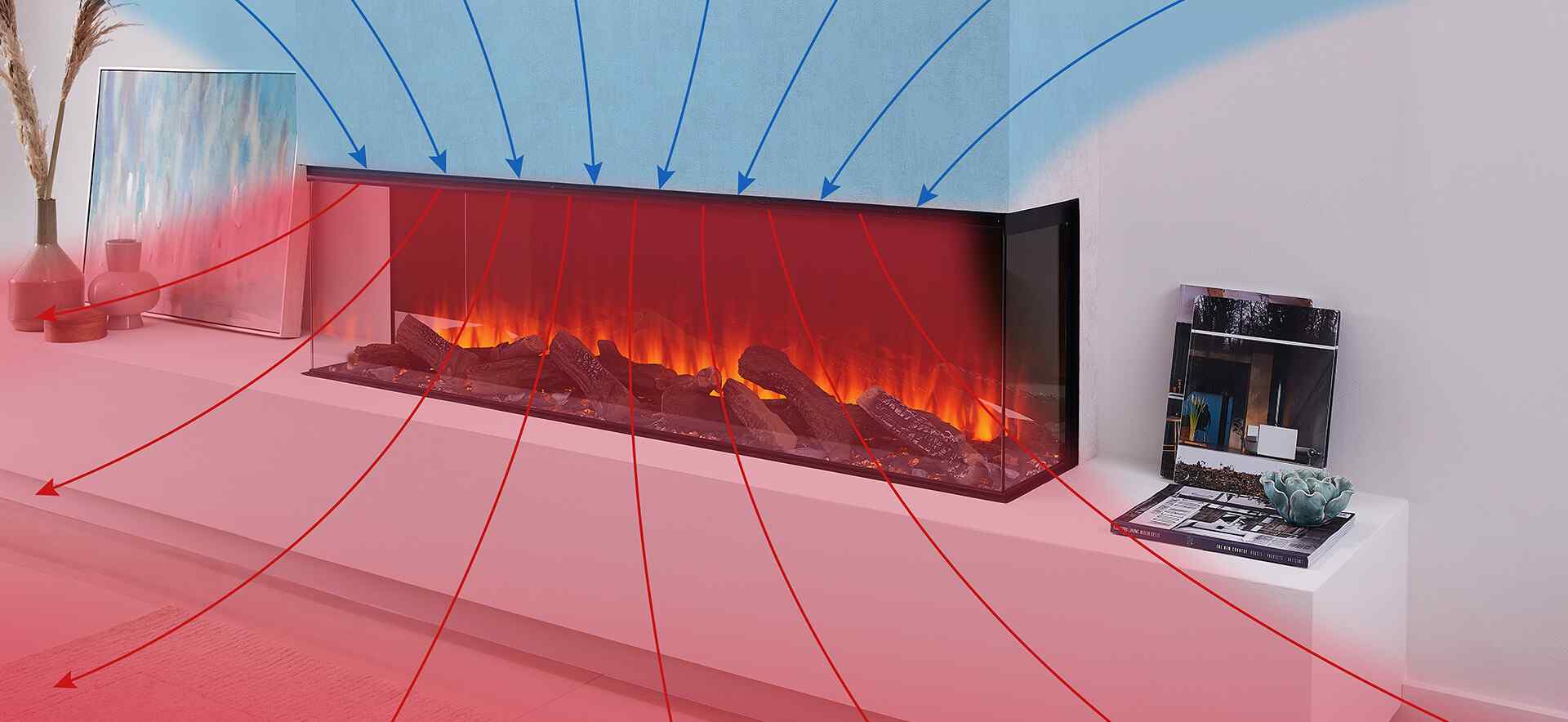
How does an electric fireplace work if it doesn’t burn wood the old-fashioned way? Simply put, an electric fireplace uses electricity to power a heating element, then uses a blower to create warmth. 

When it comes to flame effects, this fireplace model uses a mixture of LED lights, mirrors, and digital screens to create the illusion of a fire. The result is a fireplace that gives all the warmth and appeal of a traditional fire without the prep work, venting, or scent. 

Electric fireplaces are easy to plug in and start using. Electric fireplace manufacturers recommend having a dedicated outlet for the fireplace to ensure the circuit will not get overloaded. All electric fireplaces use a 120V circuit, although some units can use a 240V circuit if more heat is desired. You can use either a remote or manual control to adjust the temperature, flames, or light intensity. There are also handy settings like a flame-only mode to give you the ambiance of a fire without the heat (an ideal feature for summer).

Built-in safety features, such as cool-to-touch surfaces and auto shut-off, make these installations even safer to use. When it comes to the comforts of daily life, electric fireplaces have turned convenience into an art form. 
 

Electric Fireplaces vs Gas Fireplaces: What You Should Know

You may now be wondering, “How do electric fireplaces work compared to gas fireplaces?”. While both fireplaces provide heat and ambiance, their differences generally revolve around installation, cost, maintenance, and daily use. 

Fireplace Type  Electric Gas
Installation No venting required. You only need a standard outlet.  Requires venting and potentially permits or gas lines.
Cost Costs less to install than the average gas fireplace. Costs more to install but may cost less to run, depending on utility costs in your area..
Maintenance Very minimal. Usually only needs wiping down for dust or changing out the lightbulbs. Requires annual servicing and vent checks. 
Daily Use Faster and simpler to turn on and use. The heat feels similar to a space heater. The heat source can be turned off to provide only the ambience of a fire no matter the weather outside Are best used for cold weather.
Safety  No open flames or gas leaks. Especially safe if you have pets and/or children. Safe to use when they are an enclosed unit. Safe with children and pets when the safety screen is installed.
Realism Electric flame realism looks better than ever thanks to modern technology.  Some homeowners may still prefer real flames and the warmer heat. 

We offer free quotes for electric fireplaces to get you closer to the home you’ve always wanted. Check out our electric fireplaces to see how a little warmth and ambiance can enhance your decor. 


The Main Benefits of an Electric Fireplace: Installation, Energy Efficiency, and More

How do electric fireplaces work to make your life easier? We’ll count the ways with benefits ranging from easy installation to energy-efficient perks. 

1. Fast Installation and Easy Maintenance All Year Long

Electric fireplaces are not only easy to install, but they’re also easy to use and maintain. For starters, they have a plug-and-play design since they don’t require a gas line or chimney.

Technicians are usually able to install an electric fireplace within an afternoon. You also don’t need to call someone to service it constantly, thanks to its low maintenance. Just change out the bulb when it goes out and wipe down the exterior when it gathers dust. 

2. Energy Efficiency and Cost Effectiveness

Since electric fireplaces convert nearly all electricity to heat, they’re a reliable option to make sure you get more bang for your buck. The average Utah resident spends around $145 per month on electricity, which is already 33% lower than the national average.

With an electric fireplace’s built-in cost-effectiveness and zone heating capabilities, you can save even more money. 

3. Simple to Use and Safe for Your Family

Since electric fireplaces don’t use real flames, there are no emissions that could irritate your sinuses if you’re sensitive to smoke. These installations also have no burn risk for children or pets. 

One of our favorite details about electric fireplaces is their increased safety features. At Croft Fireplace, we only provide UL-listed and safety-tested products to give you peace of mind when ordering a new fireplace. 

4. A New Electric Fireplace Could Add to Your Home Value

Are you considering selling your home in the future? An electric fireplace could be a great way to enhance your resale value by making your home extra attractive to buyers. 

Not only is the upgrade stylish, but it’s also incredibly functional for cold winters or adding a little atmosphere to peaceful evenings. 


Do any of these benefits catch your eye? Browse our electric fireplaces to see multiple before-and-after photos of our past projects. 


What Are the Different Types of Electric Fireplaces?

How do electric fireplaces work when it comes to different installations? While their basic function will be the same, the differences will make themselves clear in terms of design. 

    • Inserts: This option is ideal for existing fireplaces thanks to their easy fit.

    • Wall-mounted: Sleek, modern, and space-saving. Ideal for condos and small homes.

    • Freestanding: Portable and flexible placement. This option is great for renters.

For example, our LEX4 Electric Fireplace is well-suited to living rooms, offering an ambient glow that fills the space and creates an inviting atmosphere. Smaller homes, however, fare well with our tidy Redstone Insert. The snug fit makes a great statement piece, even for limited space.


Is an Electric Fireplace Right for Your Space? Style and Ambiance

How do electric fireplaces work for your interior design style? Overall, electric fireplaces are incredibly stylish and look good in a wide variety of rooms or interior design styles.

Whether you enjoy a sleek, minimalist home or prefer a rustic throwback, electric fireplaces seamlessly fit right in. If you can see yourself in any of the following statements, an electric fireplace could be in your future: 

    • You love curling up with a good book or movie in the cozy glow of your living room.

    • You want to add a little more ambiance and atmosphere to family or couple activities.

    • You enjoy having an inviting centerpiece for gatherings or relaxation. 


Is It Worth Installing an Electric Fireplace?

If you’ve wanted a fireplace, but balked at the cost or safety requirements, an electric fireplace could be your new favorite home installation. This fireplace’s affordability, safety, style, ease of installation, and cost-effective design are a knockout win for many homeowners today.


See what our customers have to say about our history of fast and friendly fireplace installation:

“I had Croft do 3 fireplaces for me at my old house around 2019, so when I needed 5 new fireplaces for the new house, I called them. They did an amazing job with 5 very unique custom fireplaces that I am very happy with, and they were fairly priced.”Dan J. 


Croft Fireplace is Ready to Install Your Elegant and Cost-Effective Electric Fireplace

Electric fireplaces are one of the most beautiful, energy-efficient, and long-lasting home additions. Our experienced, local team offers free quotes to help you narrow down both the style and budget for your new electric fireplace. 

Get your free quote today to see how a new installation can completely transform your home!

How Much Gas Does a Gas Fireplace Use?

How Much Gas Does a Gas Fireplace Use?

If you’re considering purchasing a Valor gas fireplace or another high-quality option from Croft Fireplace, you might be wondering how much gas is needed to operate it. How much gas does a gas fireplace use? It’s a crucial question for estimating your fuel costs.

A gas-burning fireplace requires a constant gas source to function, which involves a different cost calculation than other types of fireplaces. However, the amount of gas you need varies greatly depending on a number of considerations. 

We’ll explain gas fireplace BTU, break down the factors that impact how much a gas fireplace costs to run, and share some cost-saving tips to help you enjoy the glow and heat without breaking the bank.

Browse a specific category by clicking on any of the quick links below:

Understanding Your Fireplace’s BTU

Before you make any calculations, it’s important to understand BTU. Short for British thermal unit, BTU is a measurement of heat that indicates how much heat a fireplace creates with the maximum amount of fuel. Knowing the BTU of your gas-burning fireplace will help you calculate the cost of using it. 

For example, a fireplace with a 60,000 BTU rating will consume up to 60,000 BTUs per hour of use. However, the level of BTU varies based on different circumstances.

Consult your fireplace provider to learn more about your fireplace’s BTU. This information is essential for estimating fuel costs.

Factors That Impact the Cost of Gas for Your Gas Fireplace

Quite a few components come into play to influence the amount you’ll pay to use your gas fireplace. Here are some of the factors that make a difference.

Fuel Source

The cost to use a gas-burning fireplace varies based on whether it’s fueled by natural gas or propane. These fuel sources cost different amounts per therm, a measurement of how much fuel is needed per 100,000 BTU. 

Natural gas is typically sold by the therm (100,000 BTUs), while propane is sold by the gallon (which equates to about 91,500 BTUs). Though the units differ, propane often costs more per BTU. If natural gas costs $1.20 per therm and propane costs $3.00 per gallon, for example, propane heating ends up being significantly more expensive for the same heat output. 

Staying apprised of the current rates of natural gas vs. propane costs is essential for estimating overall heating prices accurately.

Fireplace Purpose

One aspect that can influence how much BTU a gas-powered fireplace has is whether it is designed to be a decoration or a heat source. Decorative fireplaces are intended to benefit a room’s ambiance and appearance, whereas heat-producing ones are meant to warm the entire room. You can actually get the most bang for your buck with an energy-efficient direct vent fireplace—it produces significantly more heat and uses much less fuel than an open gas-log fireplace.

Usage Details

Another factor determining how much your gas-powered fireplace will cost is the time of year in which you intend to use it. Gas is only used when your fireplace is running, so you’ll pay more the longer the unit runs. You may choose to run the fireplace more in the winter when it’s colder, using more fuel. In the summer, you may decide not to turn it on at all. Factoring in how many hours, days, and times of year you will be operating the fireplace is essential when making your final calculations.

Fireplace Settings

How often you use your fireplace has a big impact, but so do the settings you select when you turn it on. It won’t come as a surprise that intense, bigger flame setups will use more fuel than more modest settings. Adjusting your gas fireplace to produce large flames, cranking the temperature, and using the unit more often will all increase your fuel costs.

Maintenance Regularity

You probably know that you’re likely to save money at the gas pump if you get regular oil changes, keep your tires evenly inflated to the correct PSI, and follow the manufacturer-recommended maintenance schedule for your car. Gas fireplaces may not have tires, but they operate under a similar principle.

Hiring a professional for an annual check-up and regular maintenance services can keep your fireplace running at peak efficiency, saving money in fuel costs. On the flip side, a lack of maintenance can leave your fireplace working harder to achieve the results it once did—driving up fuel use and prices. Damaged vents, clogged ports, debris build-up, and reduced airflow all have an impact.

Climate

It’s common sense: Colder weather generally encourages us to use our fireplace. There’s nothing quite like snuggling up in front of a fireplace while the air is crisp and snow blankets the world outside. If you experience lengthy, extreme winters where you live, there’s a good chance you’ll need more gas. You’ll be using your fireplace more often and at a higher temperature.

But elevation also comes into play. Those living in the Utah mountains may experience reduced air density, which can drive up gas consumption. Being surrounded by majestic mountains is stunning, but this is one trade-off.

Fireplace Size

Bigger fireplaces cost more to maintain and use than smaller units. It’s really that simple. Now, as we pointed out earlier, settings also come into play. A large gas fireplace in lower settings may use less gas than a medium-sized fireplace that is always running full blast. But all other factors being equal, a big, beautiful fireplace simply costs more to run.

Home Style

Your home’s design and layout help determine how much gas you need to heat a room and keep everyone toasty. A ranch-style home with a relatively closed den or living room may do a better job of keeping the heat contained compared to a modern house with vaulted ceilings and an open floor plan. 

How to Calculate Fuel Costs

As you can probably tell from our long list of factors impacting total cost, there are many variables that make a simple calculation challenging. We can offer some generalizations, but you’ll have to look at your actual usage, along with the factors above, to get an accurate estimate.

You’ll need to know your gas fireplace’s BTU rating, whether you’re using propane or natural gas, and local fuel rates.

  1. Figures depend on the value of a BTU per unit of fuel.
    • Natural Gas: 100,000 BTU per therm
    • Propane: approximately 91,500 BTU per gallon
  2. Divide your fireplace’s BTU output by the BTUs per unit of fuel to see how many therms or gallons it uses per hour.
    • Example: Let’s look at a 30,000-BTU gas fireplace. With natural gas, it would use up to 0.3 therms per hour. With propane, it would use around 0.33 gallons per hour. If you’re running the fireplace on lower settings, it’s probably using fewer BTUs.
  3. Multiply the answer by the current rate per unit of fuel to calculate the cost per hour.
    • Example: Continuing our example of the 30,000-BTU fireplace above, let’s say natural gas costs $1 per therm. The fireplace would cost about $0.30 per hour to operate at full capacity. If propane costs $2.66, then your propane-fueled gas fireplace would cost around $0.88 per hour to run.

Cost-Saving Tips for Using Gas Fireplaces

A gas fireplace epitomizes warmth, coziness, and comfort. We believe its value goes beyond the warmth it provides; it offers a homey yet luxurious experience. 

But very few of us get to live our lives without checking our bank account balances. Here are some money-saving tips to help you enjoy the experience while considering total costs.

Use Energy-Efficient Fireplace Inserts

Certain inserts are designed to offer more heat while using less energy. If your current setup isn’t designed for energy efficiency, upgrading to an eco-friendly fireplace insert can be a wise investment for the environment and your monthly fuel costs.

Install a Fireplace Blower

This special fan can make your gas fireplace more efficient by spreading the hot air out, helping the room heat more quickly and effectively. A fireplace blower may enable you to use lower settings for the same effect, reducing your BTU and overall energy consumption.

Invest in Proper Maintenance

We mentioned this above as a factor in your spending. If a lack of regular maintenance can drive up costs, you can save money on fuel by having a professional look at your system and make sure it’s running at peak efficiency. Croft Fireplace offers gas fireplace maintenance; it’s a great place for Utah residents to start.

Saving on Overall Heating Costs

We’ve been focused on saving fuel costs for your gas fireplace, but what if you could actually utilize your fireplace to reduce your home heating bills? One of the best ways to reduce your gas bill during colder months is to practice zone heating. This involves keeping your thermostat at a cooler temperature and just heating the spaces where you spend the most time. 

If the idea sounds familiar, you’ve hit the nail on the head: Using a gas fireplace for heat is an example of zone heating in action! Turn your furnace down and spend more lazy nights reading or watching TV in front of the fire. An energy-efficient fireplace insert uses much less fuel than heating your entire house with your furnace. 

One customer reported reducing his gas bill by $50 per month by adding a single fireplace insert to his home! 

Reach Out to Croft Fireplace for Help

At Croft Fireplace, we have the expertise to take care of all your fireplace needs. We are the premier stop for Utah residents looking for a new fireplace. Our financing options make your new fireplace easy to pay for, too. 

We look forward to working with you to bring the beauty of a fireplace into your home.

Modern Gas Fireplace Design Ideas for Stylish Homes

Modern Gas Fireplace Design Ideas for Stylish Homes

Fireplaces have long been the heart of the home, but the way we interact with them is shifting. No longer just a utilitarian heat source tucked into a brick alcove, the modern fireplace has evolved into a sophisticated design element that defines the architecture of a room. If you are planning to add or convert to a gas fireplace this coming year, you are likely looking for gas fireplace ideas that blend cutting-edge technology with timeless aesthetics.

(more…)
Using a Thermostat with a Gas Fireplace: What to Know

Using a Thermostat with a Gas Fireplace: What to Know

Introduction

In many cases, yes. You can add a thermostat to a gas fireplace as long as the fireplace and the thermostat are compatible. Thermostat control lets the fireplace respond to room temperature instead of waiting for you to switch it on and off.

Do gas fireplaces work with thermostats across the board? No. They use different control systems, and each accepts a different range of thermostats. Confirming compatibility first prevents damage to the controls.

Some units use a millivolt system, others low-voltage wiring or a control module, so requirements vary and some jobs call for a technician. If you are still shopping, a trusted fireplace store can point you toward models with thermostat control already built in.

Can You Add a Thermostat to a Gas Fireplace?

A thermostat can control many gas fireplaces, but not all of them. It opens and closes the circuit that tells the fireplace to light or shut down. If your unit accepts that signal, a compatible thermostat can run it.

Do gas fireplaces have thermostats built in? Many newer ones effectively do. Models like the Valor H6 and H3 include a handheld remote that acts as the thermostat, reading room temperature and cycling the fireplace with no wall device at all. Most older units rely on a plain switch instead. So can you put a thermostat on a gas fireplace you already own? It depends on the control system. Units with a simple on and off switch often accept a thermostat in its place. Fireplaces with sealed modules or proprietary receivers may only accept the brand’s accessory.

Your manufacturer’s specifications settle it. The installation manual and the rating plate behind the lower louver tell you what the unit accepts. When the manual is missing, a professional assessment is worth the call. The same applies during a new gas fireplace installation, where thermostat wiring is easier to plan beforehand.

How Does a Thermostat Work With a Gas Fireplace?

So how does a gas fireplace thermostat work? A compatible thermostat talks to the fireplace control system through a low-power circuit. It completes or breaks a connection, and the fireplace responds.

The thermostat reads the air temperature in the room where it sits. When the room drops below your set point, it closes the circuit and the fireplace ignites. Once the room warms to that setting, the circuit opens and the fireplace shuts down.

The gas valve does the actual work. It receives the signal, then manages ignition, flame, and shutdown by the manufacturer’s design. The thermostat only asks for heat.

Compare that with manual operation. With a plain wall switch, you decide every time the fireplace runs, so the room swings warm, then cool. Thermostat control smooths those swings out.

What Type of Thermostat Works With a Gas Fireplace?

The right thermostat depends on the control system inside your fireplace. Voltage, wiring, and manufacturer requirements decide the answer, not the features you prefer.

Millivolt thermostats are the most common match for older and standing-pilot fireplaces. A millivolt system makes its own power from a thermopile heated by the pilot flame, which is why these units still light during an outage. That power is tiny, so the thermostat must be rated for millivolt loads.

Low-voltage thermostats, typically 24 volts, suit fireplaces built around a transformer or control module, but only when the manufacturer lists that voltage and wiring as approved for your model.

Programmable thermostats add schedules, so the fireplace can warm a room before you wake up or shut down at bedtime. Compatibility is narrower, since many need battery or hardwired power a millivolt fireplace cannot supply.

Smart thermostats vary the most. Some manufacturers sell app-connected controls for their own fireplaces, and those work well. General purpose models often need a common wire or constant power a fireplace circuit does not provide.

One assumption causes most failed installations. A thermostat that runs your furnace is not automatically safe for your fireplace, and an HVAC model on a millivolt circuit can leave the unit unresponsive or damage the valve.

Thermostat Compatibility Comparison

Thermostat typeTypical fireplace systemPower sourceCompatibility notes
MillivoltStanding pilot, thermopile valveFireplace thermopileMust be rated for millivolt loads
Low-voltage (24V)Transformer or control moduleFireplace transformerOnly if the manufacturer approves it
ProgrammableVaries by modelBatteries or hardwiredOften needs power a millivolt system lacks
SmartElectronic or module-basedConstant power or app moduleBest results with brand-specific controls

This is a general comparison. Your manufacturer and model number determine what actually works.

How to Add a Thermostat to a Gas Fireplace

At a high level, this is a short project with one demanding step, confirming compatibility.

Start by identifying your fireplace model and control system. Look for the rating plate behind the lower louver or inside the access panel and note the make, model, and serial number. Then check the manufacturer’s specifications for which thermostats the unit accepts and at what voltage. A remote-controlled model may already have the feature built in.

Next, look at what is already on the wall. A basic switch, a remote receiver, or a control module each point to different options. Then choose one the manufacturer approves.

Installation generally means connecting the thermostat to the fireplace control circuit in place of the existing switch, following both sets of instructions exactly. Then test a full cycle, raising the set point to confirm ignition and lowering it to confirm a clean shutdown.

Wiring differs between models, and familiar terminal labels do not always carry the same function. If anything is unclear, bring in a technician. Our fireplace repair services cover thermostat and control work in Utah, and a service call costs less than a replaced valve.

Installation Considerations and Common Mistakes to Avoid

Gas fireplace thermostat compatibility comes first, followed by wiring, the millivolt or low-voltage nature of the system, and power needs. Placement, manufacturer requirements, and local safety rules round out the list.

Placement deserves more attention than it gets. A thermostat mounted too close reads heat coming off the fireplace rather than the room, so it shuts down early and leaves the rest of the space cold. Mount it on an interior wall, away from direct heat, drafts, and sunlight.

Wiring mistakes are the expensive kind. The wrong voltage in a millivolt circuit can damage the valve or control board, a repair costing more than the thermostat.

The common errors are worth naming plainly. Homeowners install an incompatible thermostat, assume any HVAC model will work, ignore manufacturer requirements, modify wiring blindly, choose a poor location, or skip testing. Each traces back to the same fix. Confirm compatibility before buying or connecting anything.

Benefits of a Thermostat-Controlled Gas Fireplace

The main benefit is a steadier room. Instead of running until someone notices the space is too warm, the fireplace cycles around your setting and holds it.

Automatic operation is the second benefit. The fireplace responds to the room on its own, so nobody has to track how long it has run or get up to turn it off. You set a number and leave it.

There can be efficiency gains too, since the fireplace runs only when the room calls for heat, though results depend on your home and habits. For anyone using a gas fireplace as supplemental heat, that cycling is where thermostat control earns its keep.

Can You Replace a Wall Switch With a Thermostat?

Often, yes. If a simple wall switch controls your fireplace and the manufacturer approves thermostat operation, a compatible thermostat can take that switch’s place on the same wires.

The wiring already in the wall shapes what is possible. Millivolt fireplaces usually run two thin wires to the switch, which suits a millivolt thermostat. Module or receiver based systems may need a manufacturer accessory.

The difference is straightforward. A wall switch is manual and holds the fireplace on until you flip it off. A thermostat cycles it automatically on room temperature.

An existing switch is not proof that any thermostat will work. It tells you the circuit is reachable, not that the fireplace accepts the device you have in mind. Confirm the control system first, and call a professional when compatibility is unclear.

Frequently Asked Questions

Does installing a thermostat on a gas fireplace require an electrician?

Not always. Millivolt systems use very low power and no household current, so a fireplace technician usually handles it. If line voltage or a new circuit is involved, call an electrician.

Will a smart thermostat work without external power on a millivolt system?

Usually not. Most smart thermostats need constant power a millivolt fireplace cannot supply. Look for a smart control designed by your manufacturer instead.

Is it safe to leave a gas fireplace on thermostat mode overnight?

Follow your manufacturer’s guidance. Many fireplaces are approved for thermostat operation, though some manuals advise against unattended overnight use. Working carbon monoxide and smoke detectors are essential.

Can I use a regular thermostat on a gas fireplace?

Only if it is rated for your fireplace’s system. Standard furnace thermostats are built for HVAC voltages and can fail to trigger a millivolt valve, or damage it.

How do I know if my gas fireplace is thermostat compatible?

Check the rating plate for the model number, then review the installation manual or manufacturer’s website. A technician can confirm it in one visit.

Can an existing gas fireplace be upgraded to thermostat control?

Many can, particularly millivolt units with a wall switch. Older or proprietary systems may need a manufacturer accessory. Newer remote-equipped models often need nothing at all.

Final Thoughts

Many compatible gas fireplaces can run on thermostat control, and the comfort gain is worth the effort. The rule that matters is confirming compatibility before you buy.

Control systems vary between brands and model years, so follow your manufacturer’s requirements and call a professional when wiring is unclear. Explore your options with Croft Fireplace and request a quote for expert guidance.

Gas Fireplace Maintenance: Essential Tips, Service Guide & Safety Checklist for Homeowners

Gas Fireplace Maintenance: Essential Tips, Service Guide & Safety Checklist for Homeowners

As the crisp autumn air begins to roll off the Wasatch Range and settle into the valleys of Salt Lake, Davis, and Weber counties, there is nothing quite like the flick of a switch that brings a warm, glowing hearth to life. Whether you are coming home from a day of skiing at Snowbird or just settling in for a cozy evening in Bountiful, your gas fireplace is the heart of your home’s comfort.

(more…)
How to Make Your Home More Eco-Friendly This Earth Day

How to Make Your Home More Eco-Friendly This Earth Day

The fallout from climate change grows more noticeable with each passing year, which is why it makes sense to look for greener, more eco-friendly options in all aspects of your life, including your home. In honor of Earth Day, let’s run down some ways that you can celebrate planet Earth by going green at home and reducing your water and carbon footprints.

(more…)

Request Quote


This will close in 0 seconds